

None of us imagined a worldwide pandemic to spread across the globe and take such a detrimental grasp of our working lives, not to mention our day-to-days. As we find ourselves in the unknown, we are trying to grasp life’s “new normal” and businesses are having to adjust to working differently with many going into survival mode. Restaurants are turning into takeaways, bars are turning into bottle shops and businesses are moving online. However, with all of this new content and information, many of us can become overloaded with information, messaging can become mixed and many of us can become confused. We have come up with some helpful tips that can benefit your marketing strategy and communicating both internally and with your customers.
Focus on getting your messaging right.
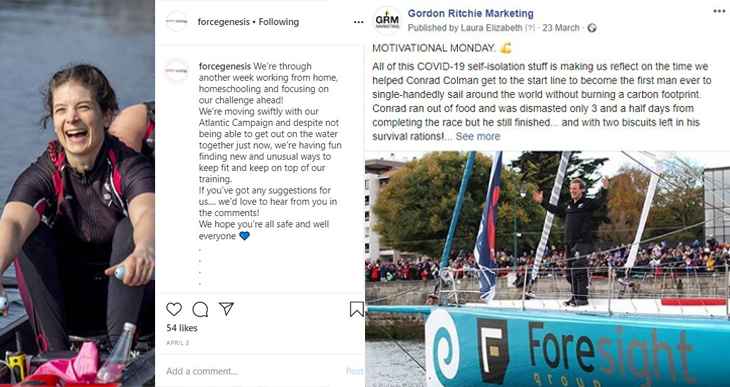
Stay positive and inspiring and focus on what is important to your audience. In their own way, your audience is likely to feel stressed, disorientated, worried, and frustrated. After being bombarded with negative information day in and day out, your audience are looking to be inspired, educated and empowered. Acknowledge that. Motivation, inspiration, good news.
We have begun a “Motivational Monday” post on GRM’s platforms and a weekly “Good News Post” for GRM clients, Force Genesis which tells our audiences something positive for the week whether it be a positive fact, some good worldly news or a positive update from the company or campaign.
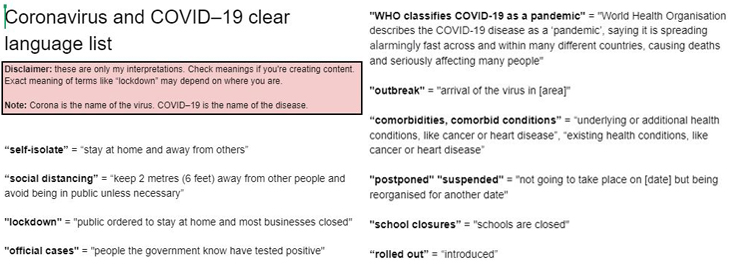
Ensure that your messaging is clear and concise. With fake news appearing everywhere and public figures like Donald Trump making absurd suggestions like injecting disinfectant to kill the virus, individuals no longer know what to think. It is important to offer helpful and accurate information to provide people with a reliable source and build trust with your organisation. Lizzie Bruce from Cake Consultancy put together a “Clear Language List”:
Don’t panic! Remain empathetic by being sensitive with your language and avoid promotions related to the crisis i.e. do not use discounts such as “enter COVID19 at checkout for 20% off” this will not impress anyone. Create helpful campaigns that support your employees, your local community and healthcare professionals. Continue to run promotions and sell but stay relevant and add messages that promote kindness and do something good.
Do something good.
There are lots of companies showing great examples of doing something good, supporting the local community and healthcare professionals. Some brilliant examples are;
Glasgow Distillery Company. The Glasgow based Distillery have added hand sanitiser to their production schedule swapping out producing single malt to hand sanitiser to help out those most in need during the coronavirus crisis. This came after urgent appeals from The British Red Cross and other service providers such as The NHS, local care homes, homeless charities and surgeries.

Glasgow based fine dining restaurant, The Gannet, is working with local food banks to produce food packages for vulnerable communities. Teaming up with the Young People’s Future Possilpark charity and Drumchapel Food Bank, the restaurant is delivering meals and supplies to the facilities three times a week.
A new report from data intelligence firm Morning Consult stated "It's no longer about talking about values; it's about demonstrating them." At this point in time, it's not about the company; your ultimate goal should not be just how to make money; you should aim to show that you care, demonstrate your values and in turn, create value for your consumers.
Social Media…
Be social with your social media and get chatty with your audience. Social media is a place to GET SOCIAL.
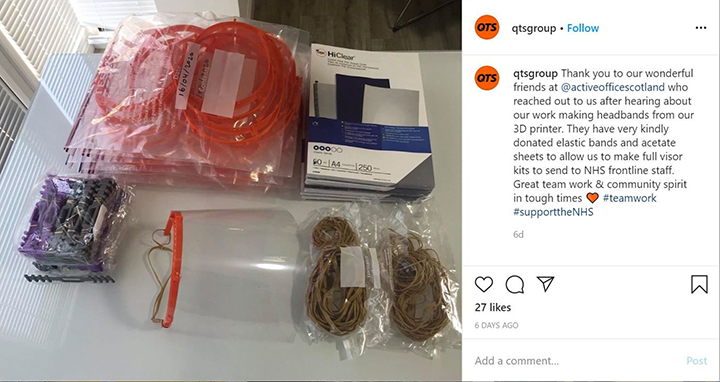
Utilise Instagram’s messaging software and approach your customers and business partners directly. Introduce yourself and demonstrate an interest in their wellbeing amongst the crisis. Comment on relevant posts, share good news posts from your customers, friends or partners and engage positively with their content. This shows that you care and keeps the conversation going, demonstrating your interest and remaining relevant and in touch so you are not lost in amongst all of the new online noise. A good example is QTS sharing their recent project with active office Scotland making full visor kits with their 3D printer and Active office Scotland’s donated elastic bands and acetate sheets to send to NHS frontline staff.
You may also want to join or create a community group on Facebook or Linkedin to engage with your companies internal and external individuals and the surrounding community, invite those interested to create new links and share positive content.
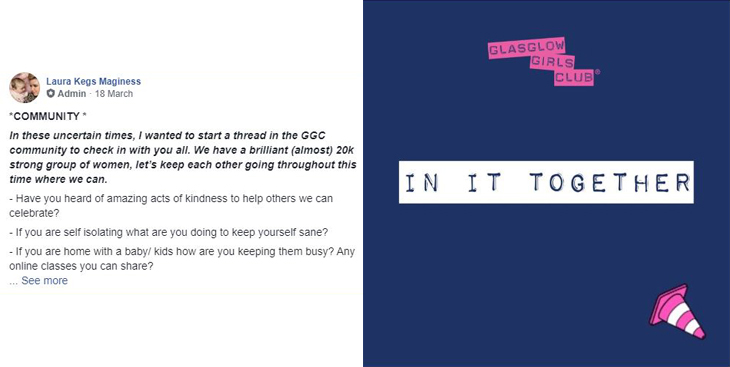
Glasgow Girls Club are a perfect example who created a community to support and empower girls across Glasgow, whether it be with their business or personal life, the platform offers a space for all girls to engage and promote one another.
Furthermore, Social media is not just a place for information sharing, it’s a place for conversation. REAL people want to have REAL conversations and by engaging in human conversation it can make your brand seem more approachable, as a human brand should be. This should also be the case for your email marketing. Now more than ever emails need a human touch…
Email Marketing
Use human sounding emails and create those that read like they come from a REAL person. Use clear calls-to-action and simple language as not to confuse your audience. Due to recent events, people have become more selective in the emails they open especially those related to the coronavirus. This decreased engagement then generates to more unsubscribes and spam reports with email providers filtering these emails into your junk folder. To avoid this, change the subject and use new, creative and relevant subject lines. Stop selling the same products with the same subject line, change it up in a way that is thoughtful and helpful to your consumers. If you have nothing to sell, focus on giving your audience positive news and inspirational content.
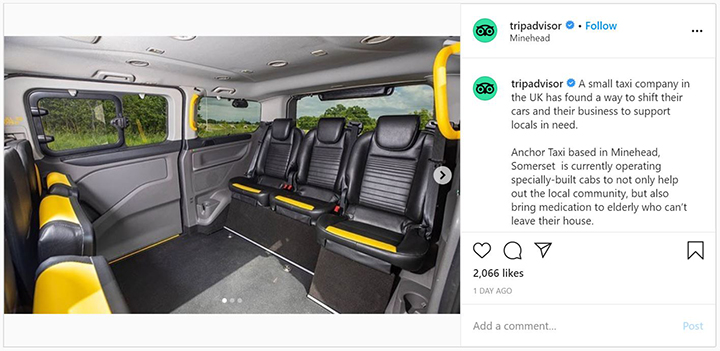
TripAdvisor are emailing their audience links to stories regarding different companies doing something inspirational during this COVID crisis including Anchor Taxi based in Minehead, Somerset, who are currently operating specially-built cabs to not only help out the local community, but also bring medication to elderly who can’t leave their house.
Adjust your language to the situation and stay away from controversial humour, technical and legal speak which will scare away your audience. Instead, use a positive, kind, REAL and reassuring tones. Really Good Emails have a fantastic article called “How to be a human marketer in a pandemic like COVID19” which gives great advice about updating your brand’s messaging.
You also want to use this opportunity to direct people to your website where, if they want to, they can look for more information. This will help you keep your emails simple and easy to understand, and not bombard your audience.
Finally, DO NOT send emails without purpose or send emails to people in your database who you have not contacted in years or those disengaged with your company. This then comes across as desperate and spammy, which will put people off and only damage your reputation. Send to individuals who are active with your emails or company.
Really Good Emails, has over 20 COVID-19 email examples that show how companies are responding during this time. With brands, such as Avis, United and REI: See them here.
Support your employees
Don’t be like Wetherspoons. Show your employees that you care and demonstrate that care to the wider community. This unprecedented time will set those companies who support and protect their employees apart from those who exploit their workers.
Some examples we have seen are companies offering Financial Planning support, Financial Assistance, Immediate paid medical leave for any employee diagnosed with COVID-19 and an expansion of childcare support.
Some companies have also focussed on mental health during this time, offering mindfulness training sessions and care. Starbucks are an example of this and have partnered with Lyra Health to offer its partners personalised, confidential mental health care, 20 free in-person or video sessions every year. This offer is open to their partners and their eligible family members and has access to online session scheduling and access to provider networks of mental health therapists and coaches.
Showing that you care about your employees will also make your company more attractive to those externally that may be looking to join your workforce. This will in turn, attract better skilled employees to help your organisation deliver more value to your customers. As such, this will and help your business move forward in this difficult time and prepare you for a high level of competition on the back of business downturn following the COVID crisis.
Prepare yourself going forward and what you need to know for the near future…
Take this time this time to train your employees to prepare your company for the future after the crisis. Identify which skills are weak and which there are the gaps you are likely to face post-COVID-19.
Skillshare is a fantastic online platform which offers a huge range of both free and paid for online training sessions for those within the creative industry. Since the pandemic, LinkedIn also opened up 16 of its learning courses for free which provide tips on how to stay productive, build relationships when you’re not face-to-face, use virtual meeting tools and balance family and work dynamics in a healthy way.
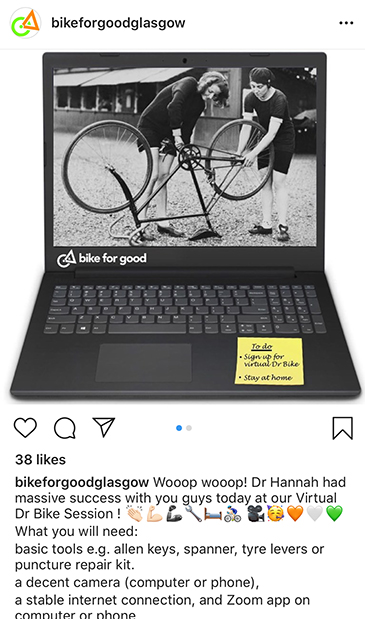
New digital services introduced by businesses to cope with the crisis may also have longevity. As discussed, many organisations have opted to offering a variety of services online. Bike for Good who are offering virtual bike fixing sessions to their audience as they are unable to fix their client’s bikes face-to-face.
So, although all may seem rather bleak with the current crisis, this is a time for identifying opportunities in the business environment and adapt to suit. Those who remain flexible, adapt and listen to their community will come out the other end stronger.
If you need a helping hand adapting your business’s communication or advice on going digital, give us an email at hello@gordonritchiemarketing.co.uk and we will offer you a consultation absolutely free.